Costumes
Krampus Costume Elements: How They Work Together in Alpine Tradition
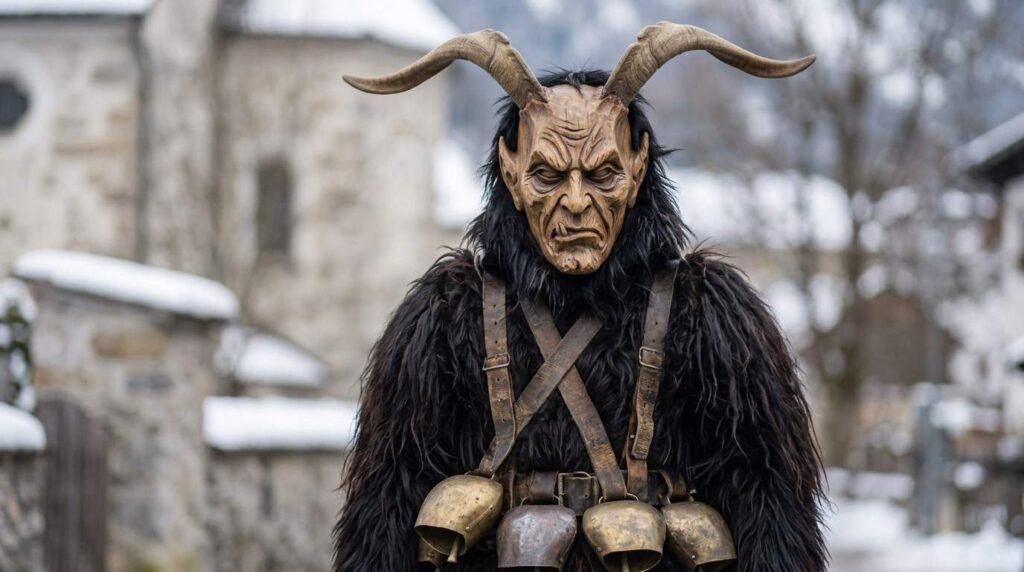
Before a Krampuslauf comes into view, its sound moves through the street … heavy cowbells, shifting fur and the sudden presence of horned silhouettes in the cold. These…
Masks, Fur, Bells & Alpine Craft
A Krampus costume is not just a monster outfit. It combines mask carving, fur, bells, horns, movement, regional style, and the cultural context of Alpine winter tradition.
Understanding the Costume
A Krampus costume usually combines a mask, horns, fur, bells, straps and other costume elements that shape both appearance and movement. The exact design varies by region, group, maker and whether the outfit is traditional, modern, handmade or commercial.
In Alpine context, costumes are connected to local groups, regional aesthetics and Krampus mask carving traditions. A handmade carved mask, a theatrical interpretation and a commercial replica may all look dramatic, but they represent very different relationships to the tradition. Our Krampus costume elements guide explores the individual components in more detail.
Krampus Costume Articles
Use the articles below to go deeper into Krampus masks, horns, fur suits, bells, props, regional styles, DIY builds, and the difference between traditional and modern Krampus costume design.
Costumes
Before a Krampuslauf comes into view, its sound moves through the street … heavy cowbells, shifting fur and the sudden presence of horned silhouettes in the cold. These…
Costumes
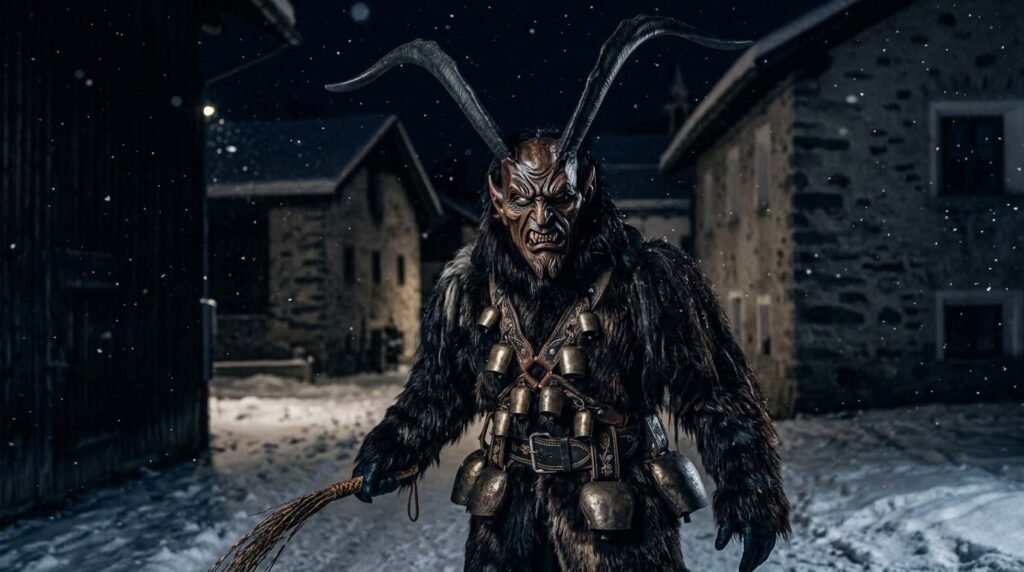
A cold winter street … breath hangs in the air and somewhere in the distance, heavy bells begin to move through the darkness, changing the mood of the…
Costumes
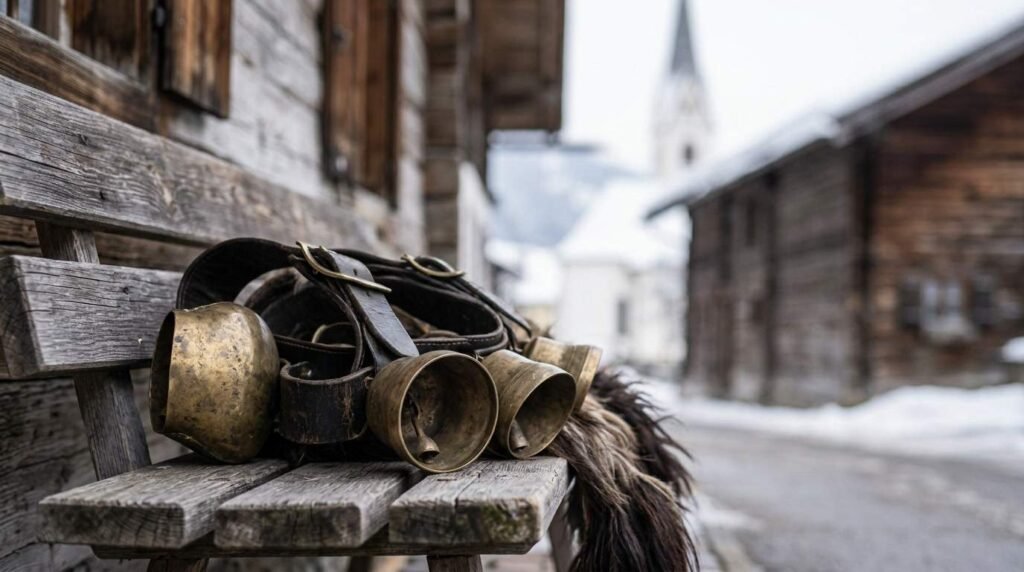
Krampus bells do more than make a Krampus costume louder … their weight changes how the performer walks, their movement gives a Pass its rhythm, and their sound…
Costumes
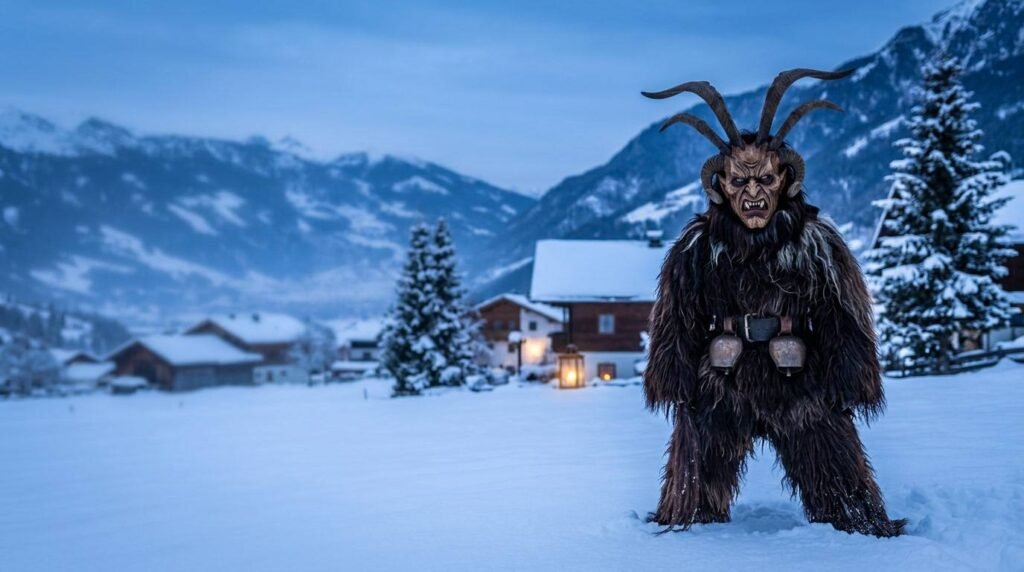
A Krampus costume is not a collection of frightening accessories … each part changes how the performer looks, moves and is understood within the Saint Nicholas tradition. The…
The Krampus Costume Guide focuses on how masks, horns, fur, bells, proportions and movement work together to create a complete figure. Regional style and craftsmanship influence how those elements are combined, while modern and commercial interpretations can follow very different design principles.
The mask is usually the strongest visual element. Carved wooden masks remain closely associated with Alpine craftsmanship, but styles vary considerably between makers and regions. Expressions can range from animal-like and restrained to highly exaggerated modern designs.
A convincing costume depends on how its individual elements work together.
Fur gives the figure volume and changes the performer’s silhouette. Horn size, mask proportions and body shape need to work together, particularly when the outfit is worn for extended periods or used in a procession.
Bells add more than decoration. Their weight influences movement, while their sound is one of the most recognisable elements of many Krampus appearances. Different bell arrangements can create very different physical and acoustic effects.
There is no single standardized look. Handmade Alpine outfits, modern group styles, theatrical designs and commercial costumes can differ substantially in materials, construction and cultural context. Understanding those differences is more useful than treating one particular style as universally authentic.
Anyone buying or building an outfit should consider more than visual impact. Weight, visibility, ventilation, footwear, fastening systems and freedom of movement all matter, especially if it will be worn at a Krampusrun or for an extended period.